Thunderbird with the ImportExportTools NG extension and Apple Mail create EML files from MBOX emails but they work one folder or a few emails at a time. Three methods create EML files from MBOX files and they are Thunderbird, Apple Mail and MBOX to EML converter software. Free methods risk missing emails unless you compare every folder with its source. MBOX to EML converter software exports many MBOX files together and preserves your folder order. Test one folder first and open sample EML files to confirm the output.
MBOX to EML conversion splits one large MBOX file into single EML emails with their attachments and HTML formatting.
IT administrators, legal teams and forensic teams move emails from MBOX files into EML files for eDiscovery and legal preservation, Windows compatibility and backup deduplication.
Users on IT forums and social media report that attachments fail to open or email details go missing after they extract EML files from MBOX files.
This guide explains three methods and two checklists that confirm your output, including the steps that split a large MBOX file into single EML files.
Why Switch From MBOX to EML?
EML files give you control over single emails. Four reasons stand out.
- Separate Files. You search, sort and archive emails one by one instead of one large mailbox file.
- Wider Support. Outlook and Windows Live Mail open EML files without an MBOX import.
- Quick Sharing. You send or store a single email without the rest of the mailbox.
- Legal and Backup Needs. Legal teams preserve single EML files for eDiscovery and legal preservation. Backup teams remove duplicate emails file by file.
Businesses archive emails for compliance and legal needs and single files suit that work.
What Separates MBOX Files From EML Files?
MBOX stores a full mailbox folder in one plain text file. EML stores a single email message as one file. You find the structure of the larger format in our MBOX file format guide.
| Point | MBOX | EML |
|---|---|---|
| Emails per file | Many | One |
| Common sources | Thunderbird, Apple Mail, Google Takeout | Outlook, Windows Live Mail, Apple Mail |
| Sharing one email | Needs an export first | Send the file as it is |
| Archiving | One large file | Many small files |
Need the reverse direction? Convert EML to MBOX Files explains the steps.
What to Prepare Before You Convert MBOX Files?
Large MBOX files produce thousands of EML files because every email becomes one file. Finish these checks before you start.
- Check the MBOX file. Import the MBOX file into Thunderbird and open a few emails to confirm the file is healthy. Converter software cannot repair a corrupted MBOX file.
- Back up the original archive. Copy your Apple Mail or Thunderbird archive to an external SSD and convert the copy.
- Choose a naming pattern. Decide how EML files are named before you export. Date first and subject next sorts your EML files in time order.
- Plan the folder hierarchy. Note your nested folders and labels. Select Maintain Folder Hierarchy so your EML files appear in matching folders.
- Use a local disk. Move MBOX files from NAS or shared locations to a local disk.
- Keep free disk space. Thousands of EML files need more space than one MBOX file.
- Split a large archive. Split MBOX File cuts a large archive into smaller parts.
- Shorten the destination path. Windows and macOS limit file name length so a short destination path avoids errors.
Long EML names break exports on Windows and macOS. Converter software renames names that exceed the limit and stores them in a separate folder.
How to Convert MBOX to EML Manually?
Two free methods create EML files from your MBOX emails. Both need manual steps and handle small batches.
Thunderbird With ImportExportTools NG (Free, Folder by Folder)
Thunderbird opens MBOX data through the ImportExportTools NG extension and saves messages as EML files. You can use Thunderbird on Windows and Mac.
- Open Thunderbird and install the ImportExportTools NG extension.
- Open the Local Folders context menu and choose ImportExportTools NG > Import mbox file. Select the MBOX file you want to convert.
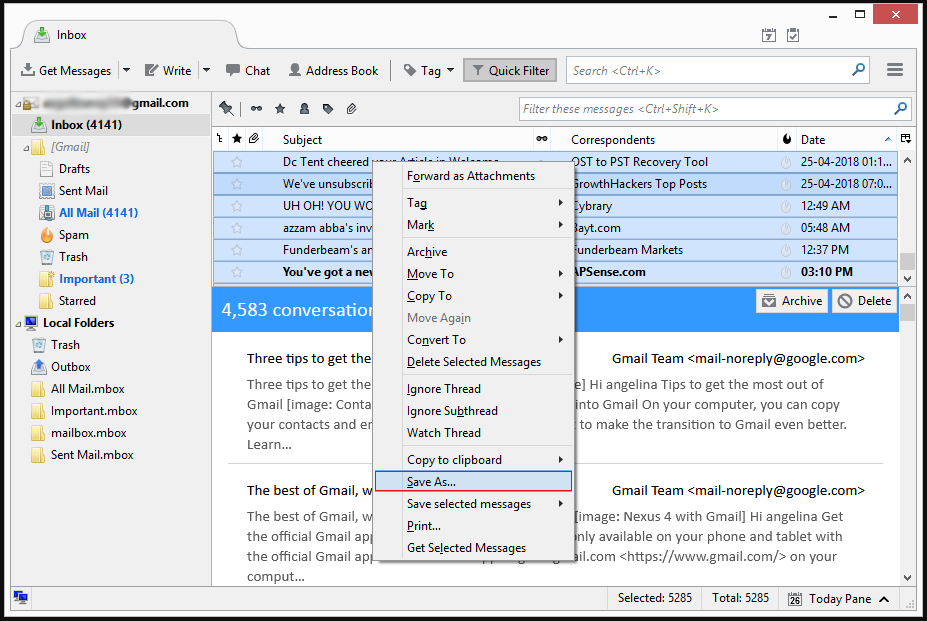
- Select all emails in the imported folder. Open the context menu and choose Save As.
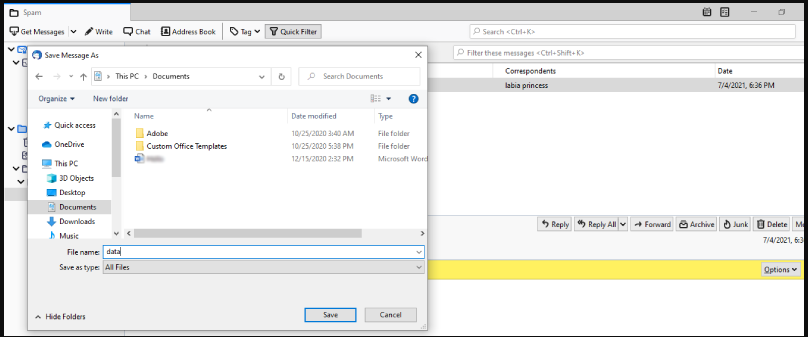
- Select the destination folder for the EML files.
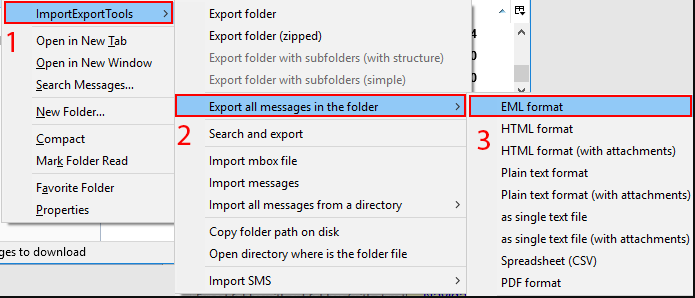
- Export a full folder in one step instead. Open the context menu of the imported folder and choose ImportExportTools NG > Export all messages in the folder > EML format.
Thunderbird saves every message as an EML file in the folder you choose. If the extension fails, follow Thunderbird ImportExportTools NG Not Working Issue.
Export one small folder first and open sample EML files. Check the dates and attachments before you export the rest.
Apple Mail (Free, Mac Only)
Apple Mail imports MBOX data and saves emails in raw source form. Use it on your Mac for a few emails.
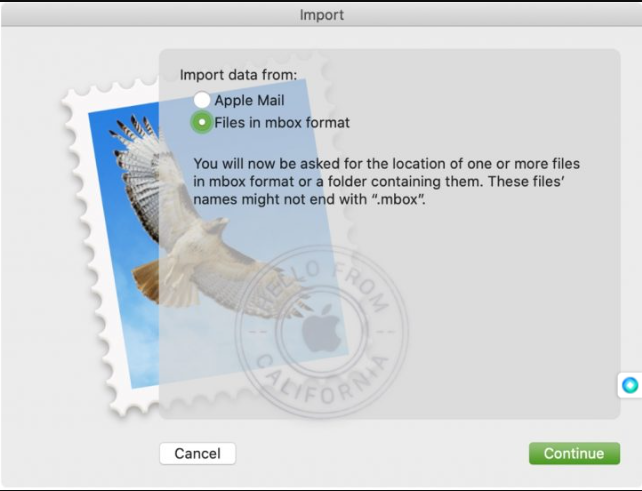
- Open Mail and choose File > Import Mailboxes.
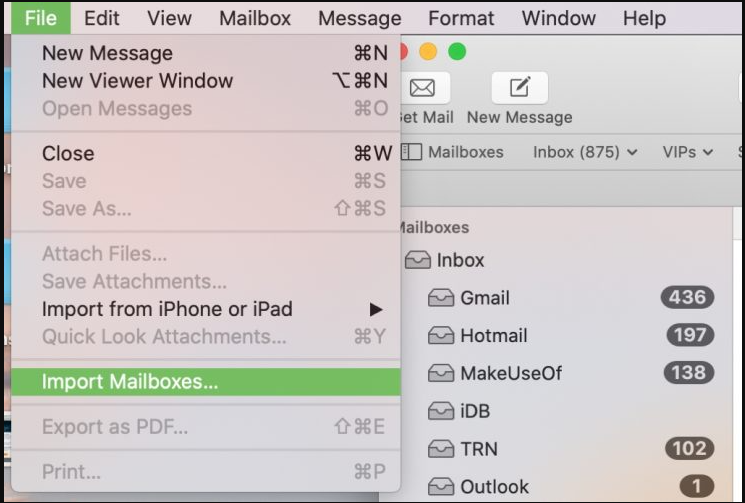
- Select Files in mbox format and choose your MBOX file. Imported emails appear under Import after the process ends.
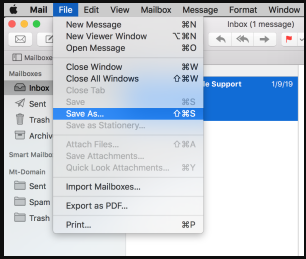
- Select one or more emails or conversations. Choose File > Save As.
- Choose Raw Message Source as the format and click Save.
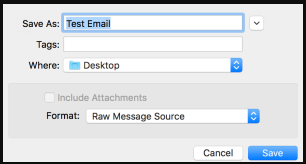
Mail saves the message as an EML file. You can also drag messages from Mail to your desktop. Our guide on how to Import and Export MBOX in Apple Mail explains the import side.
How to Convert MBOX to EML With EmailDoctor Software?
EmailDoctor MBOX Converter converts many MBOX files to EML files together and needs no email client. Windows and Mac editions are available.
Bulk conversion comes with six features.
- Folder Mode. Add one MBOX file or a folder with many MBOX files.
- Naming Convention. Name your EML files with a naming pattern and a delimiter for special characters.
- Date Filter. Set a date range and the converter exports only the emails from that period.
- Folder Hierarchy. Select Maintain Folder Hierarchy and your EML files follow the MBOX folder structure.
- Long Name Handling. Names that exceed the system limit are renamed and stored in a separate folder.
- Export Report. Review a report of every converted item.
Windows Steps for MBOX Files
- Open the converter and click Add File.

- Choose Select file(s)/folder from file system on the first screen. Click Next.

- Click the ... button and select your MBOX file. Tick Use Folder Mode to add a folder of files instead.

- Click Process to scan the data.

- Click a folder in the Folder List to preview its emails.

- Click Export on the top menu. Check all mailboxes or only the folders you need.

- Select the EML radio button and click Adv. Settings.

- Click Naming Convention to choose how EML files are named.

- Set a delimiter for special characters and add a date filter if you need one. Click Save.

- Click Browse to choose the destination folder.

- Keep Maintain Folder Hierarchy ticked and click Export.

- Wait for the export window to finish. Click OK on the completion message. Find your EML files in the destination folder.

Convert one MBOX folder first and check sample EML files. Then export the full set in one batch.
How to Save MBOX Emails as EML Files on Mac?
Mac users get the same naming and date settings in the Mac edition.
- Open the converter on your Mac. Click Add File(s) or Add Folder(s) and click Next.

- Select the EML radio button. Keep Maintain Folder Hierarchy on and tick the folders you want to convert.

- Click Advance Settings to set a Naming Convention and Date Filters. Click Save.

- Click Change to choose the destination folder. Click Export.

- Watch the Mail and Fail Count in the export window. Click OK on the confirmation box.

- Click View Report to see the CSV summary saved in the Export Report folder.

- Open the destination folder to find your EML files.

macOS accepts file names up to 255 characters. Longer EML names are renamed in the Mac edition and listed in a LongFilePath.csv file.
Open the files in any supported email client. See how to Import EML Files to Outlook or Open EML Files Without Outlook.
Which Option Suits Your EML Conversion?
Both free methods cost nothing and fit small tasks. Converter software fits bulk input.
| Point | Thunderbird | Apple Mail | Converter software |
|---|---|---|---|
| Platform | Windows and Mac | Mac | Windows and Mac |
| Cost | Free | Free | Paid with a free demo |
| Input | One folder at a time | Selected emails | Many files or folders |
| Naming convention | No | No | Yes |
| Date filter | No | No | Yes |
| Folder hierarchy | Manual | Manual | Maintain Folder Hierarchy |
| Output check | Manual | Manual | Export report |
I suggest EmailDoctor for mailboxes above a few hundred emails because its naming and date settings save manual sorting.
How to Check EML Files After Conversion?
Open the output right after the export to confirm your EML files match the source.
- Inspect the email headers. Open one EML file in a text editor like Notepad++. Check that the Date, From, To and Message-ID headers match the original email.
- Open the attachments. Open 3 to 5 EML files with PDF or JPEG attachments in Outlook or Apple Mail and open every attachment. MBOX and EML store attachments as Base64 text inside the email so a failed attachment shows that the split broke the email.
- Look for tiny files. Sort the output folder by file size. Dozens of files at 1 KB or 2 KB signal an email that split at a body line starting with From. Check those emails in the original MBOX file.
- Record hash values. Legal teams calculate MD5 or SHA-256 hash values for the EML files and save the log. Windows includes the certutil command and macOS includes shasum for these values.
What Problems Appear While Converting MBOX Files?
Six problems stop an export or make the output look incomplete.
- Extension Not Working. Reinstall ImportExportTools NG or follow Thunderbird ImportExportTools NG Not Working Issue.
- MBOX File Too Large. Break large archives with Split MBOX File and convert the parts.
- Wrong Format in Apple Mail. Choose Raw Message Source in the Save As dialog to get an EML file.
- Names Too Long. Shorten the destination path or use converter software that renames long files.
- Corrupted MBOX File. Converter software cannot repair a corrupted MBOX file. Replace it with a healthy backup copy and convert that copy.
- Demo Limit at 25 Items. Demo mode exports 25 items per folder and a license key converts the rest.
Frequently Asked Questions
Can I Split a Large MBOX File Into Individual EML Files?
Yes. All three methods create one EML file for every email. Converter software splits many MBOX files together while the free methods handle small batches.
Is There a Free Way to Save MBOX Emails as EML?
Yes. Thunderbird with ImportExportTools NG and Apple Mail cost nothing. Both need manual steps and work one folder or a few emails at a time.
Can I Convert Many MBOX Files at Once?
Yes. Converter software accepts several files or a full folder through Use Folder Mode and exports them together.
Which Email Clients Open EML Files?
Outlook, Windows Live Mail and Apple Mail open EML files. Our guide on how to Open EML Files Without Outlook explains more options.
Can I Convert MBOX Files on Mac?
Yes. Apple Mail saves emails as EML through File > Save As with Raw Message Source. Mac users also export EML files in bulk with the Mac edition of the converter.
Can I Name EML Files While Converting?
Yes. Open Adv. Settings on Windows or Advance Settings on Mac and set a Naming Convention.
Can I Convert Emails From One Date Range?
Yes. Apply the Date Filter in the same settings window before you click Export.
Does Conversion Preserve My Folder Structure?
Yes. Maintain Folder Hierarchy remains ticked by default so your EML folders match the MBOX source.
Does Conversion Keep Attachments?
Yes. Converter software stores attachments with their emails in the EML file and Thunderbird and Apple Mail save the raw email source with its attachments. Open a few attachments after the export to confirm.
Is There a Free Version of the Converter?
Yes. Demo mode exports 25 items per folder, which suits a quick test of your MBOX file.
Can Outlook Open EML Files?
Yes. Outlook opens EML files and accepts them by drag and drop. See Import EML Files to Outlook for the steps.
Can I Convert EML Files Back to MBOX?
Yes. Convert EML to MBOX Files explains the steps.
Final Words
People struggle with MBOX to EML conversion because one MBOX file contains thousands of emails and free methods work one folder at a time. Attachments and email details need a check after every export.
Back up your archive and convert one small folder first. Check the headers and attachments of some EML files with the checklist above.
After the test passes, converter software exports the remaining MBOX files with a naming convention and date filter on Windows and Mac. Select Maintain Folder Hierarchy to match your MBOX folders.
Moving the emails into Outlook next? See how to import MBOX to Outlook on Windows and Mac.
- MBOX stores many emails in one file while EML stores one email per file.
- Thunderbird and Apple Mail convert small folders for free.
- Converter software exports many MBOX files together with naming convention, date filter and folder hierarchy options.
- Check headers and attachments after every export.
Next Read: Convert EML to MBOX Files
Also Read: Import MBOX to Outlook