You cannot import MBOX to Office 365 directly because Microsoft 365 has no MBOX import. Add your Microsoft 365 account to Thunderbird and copy the emails across or move them through EML files in Outlook. EmailDoctor imports MBOX data into many mailboxes with user mapping, retry and reports.
Your MBOX file cannot go straight into a Microsoft 365 mailbox. Microsoft's import guides cover PST files only so MBOX needs a bridge.
Thunderbird, Apple Mail and Google Takeout create MBOX files and Exchange Online has no door for them. Three bridges work today. Thunderbird copies emails one folder at a time, Outlook moves EML files into mailbox folders and EmailDoctor Software imports MBOX files for many users at once.
Steps for all three ways follow below along with the Microsoft limits you must check first. Choose the way that fits your user count and file size.
What Happens When You Import MBOX Files Into Microsoft 365?
MBOX packs a whole mailbox folder into a single plain text file. Our MBOX file format guide explains how the format works.
Microsoft 365 stores mailboxes in Exchange Online. Importing copies the emails from your MBOX file into folders inside a user mailbox.
MBOX data comes from three common sources.
- Email Clients. Thunderbird, Entourage and other desktop clients save mail as MBOX.
- Cloud Exports. Google Takeout delivers Gmail data as an MBOX file.
- Old Archives. Archive mailboxes use .mbox, .mbx and .mbs extensions or no extension.
Origin does not matter as long as your file is healthy. Damaged files need repair before any import.
What to Check Before You Import MBOX to Microsoft 365?
Microsoft sets limits that decide how you import. Compare them with your plan before you copy any email.
| Limit | Value |
|---|---|
| Mailbox size on Exchange Online Plan 1 and Office 365 E1 | 50 GB |
| Mailbox size on Business Basic, Standard, Premium and Office 365 E3 or E5 | 100 GB |
| Message size between users | 150 MB |
| Message size in Outlook on the web | 112 MB |
| Messages in one mailbox folder | 1 million |
Microsoft lists these numbers on its Exchange Online limits page and updates them over time.
- Copy your MBOX data first and work on the copies.
- Check that your plan has space for the full MBOX size.
- Split a large MBOX file with Split MBOX File before you import.
- Confirm that your MBOX file opens in Thunderbird or EmailDoctor MBOX Viewer Pro.
- Place one MBOX folder per user when you plan a bulk import.
Importing copies emails and your original MBOX file remains untouched. Keep that file until you check the imported folders in your mailbox.
How to Import MBOX to Office 365 Using Thunderbird?
Thunderbird opens MBOX data and connects to Microsoft 365 so you can copy emails between the two. Copying needs the ImportExportTools NG extension and covers one folder at a time.
Connect Microsoft 365 With Thunderbird
- Install Thunderbird and start it.
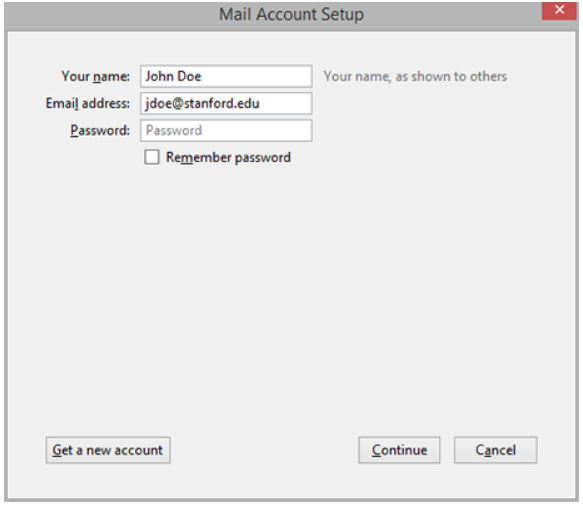
- Enter your work email address in the account setup window and sign in through the Microsoft window.
- Click Configure Manually if auto setup fails and enter the server details from the table below.
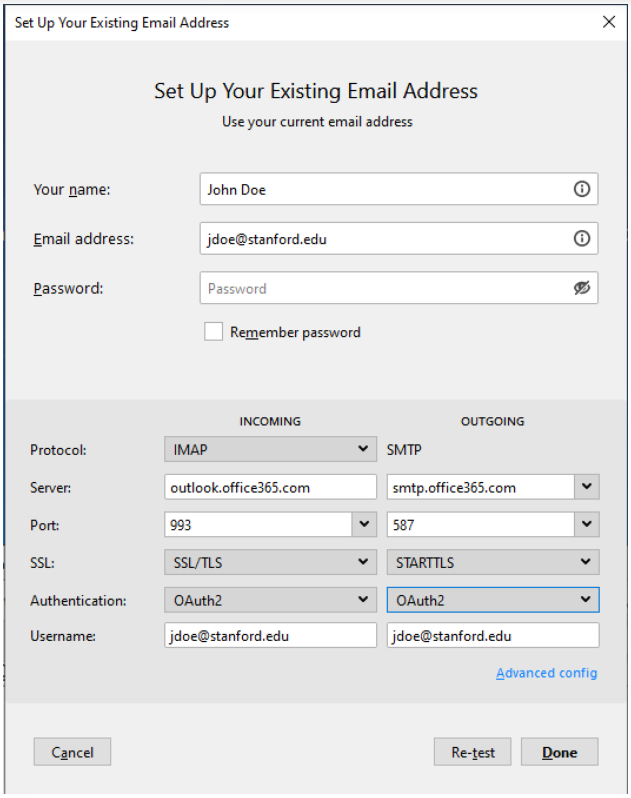
| Protocol | Server | Port | Encryption |
|---|---|---|---|
| IMAP | outlook.office365.com | 993 | SSL/TLS |
| SMTP | smtp.office365.com | 587 | STARTTLS |
- Click Done and finish the sign in. Your account appears in the Thunderbird folder list.
Exchange Online disables IMAP when your organization turns on security defaults. Ask your admin to allow IMAP for your mailbox if Thunderbird cannot connect.
Import MBOX Files and Copy Emails
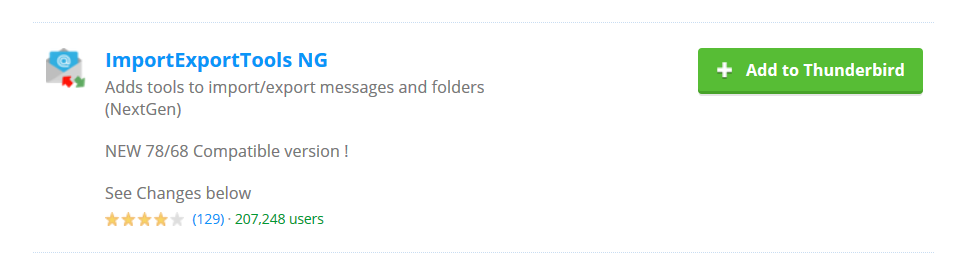
- Open the Tools menu and select Add-ons and Themes. Search for ImportExportTools NG, install it and restart Thunderbird.
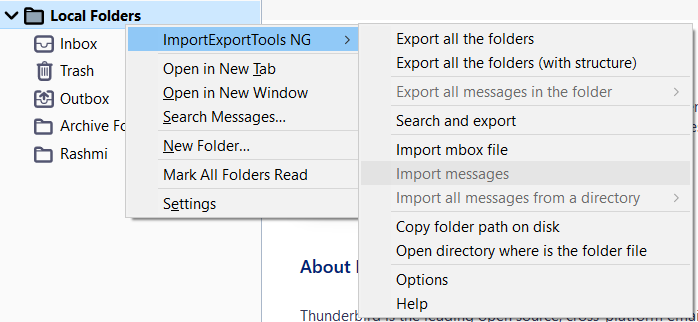
- Open the context menu on Local Folders and select ImportExportTools NG > Import mbox file.
- Click OK in the import window. Browse to your MBOX file and click Open.
- Select all emails with Ctrl+A, open the context menu and choose Copy to. Select the Microsoft 365 mailbox and a folder.
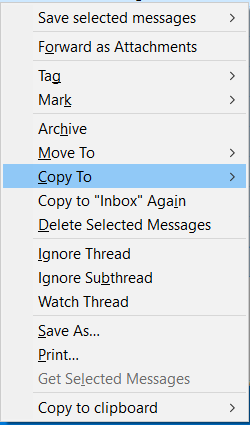
- Sign in to your mailbox in a browser and check that the emails arrived.
Create a new folder in the mailbox first. Imported emails then remain separate from your live Inbox.
Thunderbird copies emails slowly on large folders and needs a manual copy for every user. Use it for a few users and small files.
How to Move MBOX Emails to Office 365 Through EML Files?
Outlook accepts EML files by drag and drop so Thunderbird can feed Outlook and Outlook can feed Microsoft 365. You need Outlook on your PC and the way suits a few folders. Our guide on how to Import EML Files to Office 365 covers EML files in more depth.
Export Emails as EML and Add Them to Outlook
- Open your imported folder in Thunderbird. Open its context menu and select ImportExportTools NG > Export all messages in the folder > EML format.
- Open Outlook with your Microsoft 365 account and create a new folder in your mailbox.
- Open the export folder and select all EML files. Drag them into the new Outlook folder.
- Sign in to your mailbox in a browser and check the emails.
Need the EML files alone? See how to Convert MBOX to EML without Thunderbird.
Upload Large Folders as PST Files
Big archives suit a PST upload. Save the Outlook folder as a PST file with File > Open & Export > Import/Export > Export to a file. Then use the Microsoft Purview Import service, which uploads PST files over the network to Exchange Online mailboxes.
- Give your admin account the Mailbox Import Export role or use a Global administrator account.
- Download AzCopy and the access key from the Import page in the Microsoft Purview portal.
- Create a CSV mapping file that names the target mailbox for every PST file.
- Create a new import on the Import PST files page and start it after Microsoft analyzes the data.
Microsoft documents the network upload steps in full. Our Import PST to Office 365 guide adds more PST methods.
How to Upload MBOX to Office 365 With EmailDoctor Software?
EmailDoctor Software imports MBOX files into Microsoft 365 mailboxes and maps every file to a user. You need .NET Framework 4.8 or above, Microsoft Visual C++ Redistributable and a Microsoft 365 admin account with ApplicationImpersonation rights. <<SYS1M8O0M>>
Six features cover folders, mapping, filters, validation, retry and reports.
- User Folders. Name a folder after a Microsoft 365 email ID and place that user's MBOX files inside.
- CSV Mapping. Map a batch of files to Microsoft 365 users with one CSV file.
- Date Filter. Import emails from a chosen date range only.
- Validation. Validate the source folder, admin account and users before the import starts.
- Retry Options. Retry failed items or use Delta Import for new emails only.
- Reports. Download an Import Summary Report or a Detailed Report.
Connect Source and Destination
Follow these steps on Windows.
- Install EmailDoctor Software and start it. Click Help on the top right to learn about every import mode.

- On the Setup tab select MBOX as source and Microsoft 365 as destination.

- Select Email under Workload selection.

- Check Date Filter to import a date range and select From Date and To Date. Click Next.

- Create a folder on your drive. Add one subfolder for every target email ID and place that user's MBOX files inside. Paths look like C:\MBOX\user1@domain.com.

- Click the folder icon next to Import folder path and select the parent folder, for example C:\MBOX. Keep the folder name under 60 characters.

- Click Validate. Green checkmarks confirm file system and email permissions. Click Next.

- Enter the Admin Email and Admin Password on the Destination: Microsoft 365 screen. Check ApplicationImpersonation when your admin account has those rights.

- Click Validate and then Next.

Map Users and Start the Import
- Choose how to add users. Fetch Users, Import Users and Download Template all appear on the Users screen. CSV is the recommended input for MBOX files.

- Click Download Template and open OfficeUserMappingSample.csv. Fill Source User with the file name or path and Destination User with the Microsoft 365 email. Set MarkForExecution to TRUE for every user you want to import.

- Click Import Users and browse to your CSV file. Click Open and then Upload. Click OK when the user import finishes. Fetch Users loads users from the source instead.

- Select users in the list and check the Destination Email. Set priority with the star icon if needed. Click Validate and then OK.

- Click Start Import. Purchased, Consumed and Available counts appear in the license dialog. Click Start and then OK.

Track the Import and Download Reports
- Watch progress under the Pending and In Progress tabs. Click Stop Import and confirm with Yes when you need to halt it.

- Finished users appear under Completed. Open the Re-Run Import menu to select Retry Failed Items, Re-Run Full Import or Delta Import.

- Click Download Report and select Import Summary Report or Detailed Report. Extract the ZIP file to see one CSV report for every user.

- Open Settings > General and move the concurrent user slider to set how many users process at once. Click Save.

Import one small MBOX folder for a test user first. Check the folder in your mailbox and then start the full import.
Which Method Fits Your MBOX Import?
Thunderbird and Outlook cost nothing but handle one mailbox at a time. EmailDoctor Software adds mapping, retry and reports for admins.
| Point | Thunderbird | EML and Outlook | EmailDoctor Software |
|---|---|---|---|
| Cost | Free | Free with Outlook | Paid |
| Needs | Thunderbird and extension | Thunderbird and Outlook | Admin account with ApplicationImpersonation |
| Users | Single mailbox | Single mailbox | Many users with CSV mapping |
| Date filter | No | No | Yes |
| Retry options | Manual copy again | Manual copy again | Retry Failed Items and Delta Import |
| Reports | No | No | Summary and Detailed CSV reports |
| Use case | A few small files | A few folders on a PC | Bulk import for many users |
I suggest EmailDoctor Software when you manage more than a handful of mailboxes because CSV mapping and reports save hours of manual copying.
Common MBOX Import Problems and Fixes
Four problems and their fixes follow.
- Thunderbird Cannot Sign In. Exchange Online disables IMAP when security defaults are on. Ask your admin to allow IMAP for the mailbox.
- Extension Not Working. Install ImportExportTools NG and see Thunderbird ImportExportTools NG Not Working Issue.
- MBOX File Too Large. Break large files with Split MBOX File and import the parts.
- Message Too Large. Exchange Online limits messages to 150 MB between users and 112 MB in Outlook on the web.
Frequently Asked Questions
Common questions about this import are answered below.
Can I Import MBOX Files Directly to Office 365?
No. Microsoft's import guides cover PST files only. Move MBOX emails through Thunderbird, Outlook or EmailDoctor Software.
Can I Move MBOX Emails Into Office 365 for Free?
Yes. Thunderbird with ImportExportTools NG and the EML route cost nothing. Both serve a single mailbox.
Does Outlook 365 on Desktop Accept MBOX Files?
Outlook has no MBOX import. Open the MBOX file in Thunderbird, export EML files and drag them into Outlook. See Import MBOX to Outlook for more options.
Can I Import Many MBOX Files to Many Users?
Yes. EmailDoctor Software maps a batch of files to users with one CSV file and imports them together.
What Size Limit Applies to Imported Emails?
Microsoft sets 50 GB or 100 GB mailboxes by plan and a 150 MB message limit between users. Check your plan on the Exchange Online limits page.
Can I Import a Gmail MBOX File From Google Takeout?
Yes. Google Takeout exports Gmail data as an MBOX file and all three ways accept it. Learn how to Open Google Takeout Emails first if you want to check the data.
Do I Need Outlook to Import MBOX Data Into Microsoft 365?
Thunderbird needs no Outlook but the EML way does. EmailDoctor lists .NET Framework 4.8, Visual C++ Redistributable and an admin account as prerequisites and Outlook is not on that list.
Can I Stop an Import and Continue Later?
Yes. Click Stop Import to halt it. Retry Failed Items repeats failed emails and Delta Import brings only new data since the last import.
How to Check Which Emails Were Imported?
Download the Import Summary Report or the Detailed Report from the Download Report menu. Your mailbox also shows the imported folders.
Which Admin Rights Does the Import Need?
Use a Microsoft 365 admin account with ApplicationImpersonation rights. EmailDoctor Software checks the admin account permissions when you click Validate.
Final Words
Microsoft 365 imports PST files and needs a bridge for MBOX files. Thunderbird and Outlook cost nothing but handle one mailbox at a time.
EmailDoctor Software adds user mapping, retry and reports for bigger moves. Test one small MBOX folder before you import the rest.
Do you plan a single mailbox or many users today? If you only need readable copies, convert MBOX to PDF with attachments instead.
- Microsoft 365 imports PST files and has no direct MBOX import.
- Thunderbird copies MBOX emails into a Microsoft 365 account for free.
- Outlook moves EML files into mailbox folders.
- EmailDoctor maps many MBOX files to users with a CSV file and retries failed items.
Next Read: Import MBOX to Outlook
Also Read: Import PST to Office 365 | MBOX to PST Converter